News 📢
A national platform bringing together government institutions, private sector leaders, civil society organizations, humanitarian actors, and development partners to advance locally led solutions and strengthen localization across Afghanistan.
The Afghanistan Localization Lab, in collaboration with Citizens Organization for Advocacy and Resilience (COAR), will organize a National Workshop on Localization engaging approximately 50 participants from local government, private sector, civil society organizations, humanitarian actors, and development stakeholders.
The workshop marks the beginning of a transformative movement toward strengthening localization systems in Afghanistan by creating a shared platform for dialogue, knowledge exchange, collaboration, and strategic action.
Through participatory discussions and collective engagement, participants will identify policy-level priorities and develop practical recommendations to enhance local actor participation in humanitarian and development initiatives.
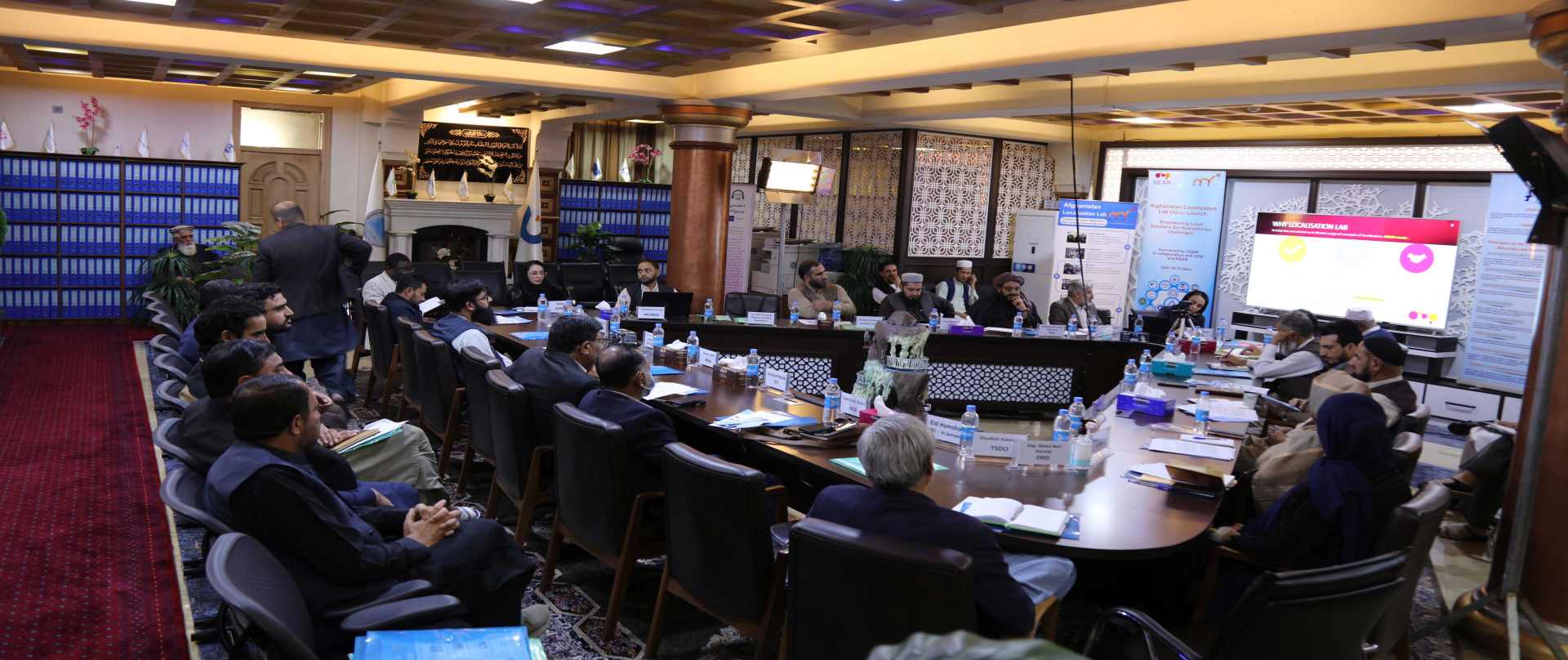
Government, NGOs, Private Sector & Civil Society
Bringing together diverse actors from government, humanitarian organizations, civil society, academia, and the private sector.
Facilitating learning, dialogue, and exchange of experiences on localization practices and challenges.
Supporting collective strategy development to strengthen locally led humanitarian response systems.
Encouraging evidence-based policy discussions to improve local participation and sustainable localization.
To provide a national platform for dialogue and awareness sharing on localization among Afghan NGOs, government institutions, private sector actors, and civil society organizations while promoting collaborative approaches for locally led development and humanitarian action.
To generate evidence-based insights on Afghan NGOs’ capacities and provide actionable data tools that support coordinated, transparent, and sustainable localization efforts across Afghanistan.
Professional venue arrangements ensuring an inclusive, accessible, and collaborative environment.
Organized refreshments and meals to support participant engagement throughout the workshop sessions.
Transportation arrangements enabling participation from key stakeholders and institutions.
Expert facilitation guiding productive discussions, collaboration, and strategy development.
Comprehensive documentation and reporting to capture recommendations, outcomes, and lessons learned.
Creating opportunities for partnership building, coordination, and collective localization action.
 Copyright © 2026 Localization Lab | Designed by MISS (ZS)